Monday, January 26, 2009

The Last Tree Standing

Earthbound, the last tree stands.
You look up, a fleeting shadow crosses your path.
This tree is one of life's tragedies, quietly
tempering itself to be alone. What else can it do,
but drip leaves, wait for shattering rain,
watch its forebears roll past? A rumbling sound
disturbing root and twig. Double lorries
trussed with logs, a girth as wide as a stone
Hercules might roll. Relocation, destruction.
The space will bear out: untidy hills, poor drainage, salt.
'They don't tell us everything,' a contractor says,
painting a house in the street. A new house
spacious, alum roof, cream brick, concrete.
What have we become "cutting timber",
to mound wood chips, to hone tabletops
for the rich to panic birds?
Still, the one tree stands, mocks us with its
artistry, noble shade; its boiled sap
hearing the woodcutter's saw. Thinking
of an old land of wallaby, bilby, bandicoot,
a cooler time with every bird singing.

Monday, January 19, 2009


The Paradox of Green

On the Destruction of Old Growth Trees, Dwellingup

When the day is twice as hot as the last day of winter, when a visit
to the country opens its secrets, 'doubt' like a downward curve touches
your shoulder. Suddenly you realise they're still raping the land.
Trucks criss-crossing the forest you used to know.
They bend to the task of filling up trays;
lorries hauling away a history of shade. And in the forests:
empty pathways, divided lots of tearaway soil,
bulldozer and saw ragging edges of old Jarrahs -
old growth without sanctuary, without song.
Seeing through it all, seeing the waft of endless
butterflies, you know the birds have fled.
Near the Murray, there's nothing so forlorn
as the empty soundless call of wind
through pines. Small pines, neat pines, no nothing
conifers that hold no wallaby nor owl.
You wonder if that one tree by the roadside,
graceful in its largesse of leaves,
still shares a sentiment with these foreign -
re-assignments filling up the hills.
On the road, the camera is the only thing that
regards this scene. And as you enter picnic
grounds, a gatekeeper informs you the road is rough
at the 2 mile-peg, and mutely anticipates
you will enjoy what is left
of a valley green.

Saturday, January 17, 2009

The Hawkesbury River


One of my favourite rivers is the Hawkesbury.
This pic was taken from the punt that crosses over the river at Wiseman's Ferry.


Robert Adamson
Australia - International Poetry Web

A Visitation

All night, wild fire burned in the tree tops
on the other side of the river. Now it's morning.
Smoking embers from the angophoras
are landing on the near shore
as a yellow-footed rock wallaby limps, dazed,
from the scrub, its fur matted.
Its tail barely able to support its weight.
Although wounded, it seems miraculous:
the soft yellow of its feet, the hard, sharp black
of its claws. It's the first yellow footer
I've seen for more than forty years...

Extracted from The Golden Bird - Robert Adamson, published by Black Inc.


Friday, January 16, 2009


This cartoon is totally irreverent, but nevertheless from a feminist perspective (& not just the woman in the pic), it's such a hilarious, subversive juxtaposition re "woman as sexual object".

Thursday, January 1, 2009


South-West Woods
                                    Tea Tree Cottage, Dwellingup

i
This year, like an inkling for shade
we head to Dwellingup: its wrinkled forest of leaves,
tree walks, birds writing songs of reminisce.
You have memories of the south, the holiday un/packing,
radio songs and kids in the back seat; camping
on the Blackwood river, loaded up with a promised
movement of bathers, scoop nets, rubber dinghy.
To this day, you do not know how 'holiday' - ever,
became a change of pace, a dialectics
of investment, rural containment,
erratic dreamlife, upheaval.

ii
Now these ghosts are long gone and this cottage,
as gift, coaxes us to its tenure of rest,
its pink myrtle, lilac borders,
timber verandah with an open sky
slithering down its starlight.

iii
Relaxed & seeking the flurry of bird & bush,
we trek the green valley dizzy with splendour.
We catch the season, evergreen: kangaroo paw
spider orchids, morning iris. Butterflies
twisting fugues of light; the Murray river rising
each time to meet rope and swimmer. We take in
the beauty of grass and ridge, a little summer heat
- wanting to be singed by this aroma of wilderness;
as if in its namesake Tea Tree Cottage
will promise us composure,
an early morning rise of watercolours,
of summer, a forest rolling past.
Six days of cabin life - we deserve it!
No high-tech, technivision, telephone.
Only a quintessential archway of cool air
infiltrating.

Tuesday, December 30, 2008

Poets on the Internet
If the truth be known, not all poetry on the internet is a challenge to the reader. On occasions, however, one does come across great poetry and so this post highlights my discovering the British poet, Graham Mort.
His latest collection is called Visibility and he has won the Bridport Prize for short fiction in 2007. He is a humanitarian (helping in Africa) and lectures at Lancaster University. View some of his work at these sites.

Graham Mort
Poetry Society UK

The Sunday Poem: The Alchemist Next Door
by Graham Mort

What he does, you wonder, hearing
him clatter quietly to his wheelie bin
on dark mornings, fumbling with black bags
when the sky is pure frozen sleep.
All night his house lights burn and you
picture him at a table etching crystals
from dull stone, their brilliance ringing
his eyes with amethyst.
Or when the bags squelch see him
butchering body parts, hands bloody,
his bedroom an abattoir, his fridge a
skull-house, backlit and grinning.
On cold days his starter-motor rasps
abraded splines, starts at the third try
when he drives off to some kind of work,
wiping the windscreen with a rag.
Or never works, but parks to watch
the windows of a certain house where
a woman drowns her face in silvered glass
and hums the cadence in his head.
You couldn't draw his face from memory
yet at weekends greet him, amiably
scooping the sundae of a frozen rose bed,
astonished by the paleness of his hands.
He watches you watching him alone,
the way your eyes absent themselves,
searching his soil for sharp serifs,
its sanskrit of fallen petals or of bone.

Saturday, December 20, 2008

Ghosts of Christmas
 
There are ghosts in this house,
a factory turkey, paper stockings,
a machine gun, boiled fruit cake,
an old Santa without raiment,
sculling back a skinful.

If you unearthed these boards
you'd find presents from a wishlist;
a Christmas tree; my son climbing
with a star, the wild scent of pine
filling every room.

And on Christmas morning,
the crush of paper underfoot;
trucks working the berber from the rug,
the throaty roar of crackers,
machines and gadgets spilling their noise
into a five am quiet.

Our children moved on small bicycles
that fitted in the backyard shed.
They circled their energy on paths,
fought, played, snuck back under
sheets, to rise like eerie ku-klux men.

These little things keep returning,
an unopened chemistry set,
gifts for the Salvos
ghosts of the big picture
haunting me again.
Resource for DOROTHY PORTER writings
Plenty to read and marvel at from Dorothy Porter at
http://www.austlit.com/a/porter-d/index.html
John Kinsella & Tracy Ryan

Three new sites for these two West Australian Poets

Mutually Said: http://poetsvegananarchistpacifist.blogspot.com/

Tracy Ryan: http://www.geocities.com/tracy_ryan

John Kinsella: www.johnkinsella.org/


Thursday, December 11, 2008

Vale
Dorothy Porter died in Melbourne this morning of 10th December from complications due to cancer. She was 54. A writer at the height of her powers, Dorothy's most recent publication was EL DORADO, her fifth verse novel. It was shortlisted for the Dinny O'Hearn Poetry Prize (Age Book of the Year Award), the Adelaide Festival Awards for Literature, the Prime Minister's Literary Award for fiction, and Best Fiction in the Ned Kelly Awards and the Australian Book Review described it thus: …this mature and accomplished work…puts her at the top of the distinguished class of contemporary Australian poets when it comes to livres composés.Four months ago Dot was diagnosed with metastasized breast cancer. She has been in treatment since. She was very positive - and wanted to keep this to herself as she was sure she would defeat it. Unfortunately there have been complications and she was admitted to hospital 2 weeks ago and ICU 10 days ago.Dorothy was the most passionate of people who gave her all to everything she engaged with. We cannot imagine the world without her.

I was fortunate to meet Dorothy when I invited her to the 2007 Perth Spring Poetry Festival. She gave a wonderful talk about her work & was so generous with her time. There was no hint of her being unwell. Three of us had a great conversation with her in the Art Gallery coffee shop. She was off to Africa after the festival and enthusiastic about her libretto being published as a movie. She talked about our own work, giving us tips, such as never give up!

Dorothy we will miss you!

Sunday, October 26, 2008

Ode to the Post(wom)an
It is always the postman delivering news,
outstretching arms to that most noticeable
point - letterbox at land's edge. Friend and
lifelong reminder of correspondences. And although
those dreaded bills equate to the missing zero at the bank,
there's harmony in a house with gas, light globes glowing dust.
Little envelopes and packages move forward
like gifts: birthday parcels, a postcard from Turkey,
stamps to re-cycle if they've missed the mark.
Most days the postie steers his heart like a looping
Evel Knievel on a wobbly ten-stroke. There's grit & sand,
grass without splendour, cars on-the-verge, savage dogs,
tom cats hypnotised by scent. We hardly praise the postie
in this current road rage, a visitor to our home we never
invite for tea. We don't call out his or her name,
We don't know our postman, do we?

Saturday, October 25, 2008

Problems for Women

When it comes to our writing tradition, it has relatively only been, (& referring to Virginia Woolf 's A Room of One's Own), a matter of eighty years since women have been allowed a sense of equality as writers. We are allowed into university libraries, we no longer hold back in relation to our female psyche. We have established the objectivism of the female through political correctness, and no subject matter is diminished by its inclusion (i.e the domestic). We no longer hide in attics (like the Bronte sisters), are taken seriously beyond the word "scribbler", and no longer experience the undermining of subjectivity re women's health issues/"hysterical" labelling - as with Charlotte Perkins Gilman's The Yellow Wallpaper. Authors of fiction and non-fiction find success with publishers, embrace all genres, are brilliant at crime writing, literary works, historical romance, to name only a few. However, these are established genres and are formulaic. And why would a female author want to change this tradition.

When it comes to the tradition of poetry for women, there are problems. Firstly, their is no tradition of women's poetry per se. If we look back in time to Wordsworth, Coleridge, Byron & Shelley we find an overarching predominence of male poets, published with collections tucked neatly under their smoking jackets. One could argue, yes, women were writing poetry at that time, but 19thC poets such as Emily Dickenson, Christina Rosetti, & Elizabeth Browning, were not published in their lifetime.

Therefore, when we discuss/argue/critique traditional poetry (& its various forms handed down), we are looking at a page where poetry is male orientated. In other words, heavily influenced by their psyche, gender, perspective, views, beliefs, attitudes, esp. attitudes towards women. Consider here the male poet's muse, that inspirational female spirit as similar as Shakespeare's Ariel to Prospero. Where does this leave the woman poet? Certainly not part of the 19thC tradition of poetry, certainly marginalised and certainly negated under the label of "woman" historically as lack, deficient, and subordinate in the position of mastery. (Luce Irigaray, - The Power of Discourse and the Subordination of the Feminine).

Therefore, when the modern woman comes to poetry, what she finds is the traditional "poetry of men". Not that that is such a bad thing. How we love the imagery of Edgar Allan Poe's Raven "knock, knock, knocking at the door" or the Falcon in Gerald Manly Hopkins' The Windhover. But this doesn't alter the fact that there has been a minority voice gone unheard.

Sunday, October 12, 2008

Masks

My daughter carries her life
in a suitcase. Life would be cosier,
for her - if she never left home.
Today she returns like a tryst
softening her edges. Perth is home.
It will bathe her in stars, & by day,
her skin will be treated to sun.
Her heels will feel the pacy city
grown, more cars, more trains,
but no trams dividing roads.
Not that she didn't like Melbourne.
No! Melbs was cool, trendy, more nightclubs
& bands. But the men, oh
the men were the same
dark hair, dark eyes from too much
ranting/ ego (or was it drugs?).
In her early move she loved the city,
the Yarra, a song she wrote, her band
at festivals, the Federation squares of art,
more terrestrial than colonised.
She frequented Brunswick, all the organic
vegie shops, two-dollar markets, loved
her Armani suit; those designer clothes
she found in trinket/ op-shops.
In Perth, she will wear these possessions
mask what she has lost.

Monday, October 6, 2008

Pacific & Indian Ocean Oysters

Around Australia there are basically three common oysters available. The most popular being the Sydney rock oyster which grows on the eastern seaboard in temperate waters. They are low in cholesterol and high in omega-3, calcium, iron and zinc. The fun is really in the prising, gathering and eating these delicious shellfish. All my life, I have fished from the many bays, inlets & now islands of my home in the West.

Poem of the Day
Oysters

Oysters are the barnacles at land's edge.
Tangled together, we prise them from rock,
gather their gritty caves, as if leaving the reef
wrecked with tiny-white burrs of empty skulls.
Now the sea is touching our tongues,
our minds not listening to each other
as we slide the muscle between teeth;
taste the oyster, if only in one gulp.
We work all morning, the tide inching its high
watermark, renewing a chipped & mottled look.
We bend & stiffen in the gathering,
amble back to the quadrangle for ice.
Olive trees shading our walk, to our own
private view of a cafe island;
the wind gathering in our hair,
pushing us forward to cutlery & tablecloth,
cane chair, eyes swallowing an ocean.

Thursday, October 2, 2008

Australian Book Review, October 2008

City of Literature
The United Nations Educational, Scientific and Cultural Organization (UNESCO) has named Melbourne as its second City of Literature, Edinburgh became the first in 2004. The Victorian government announced the bid in late 2006 and committed $9 million in the 2007-2008 budget to support the Melbourne Writers' Festival and establish the Centre for Books and Ideas at the State Library of Victoria.
   The Centre will provide a home for a variety of literature bodies, including the Melbourne Writers' Festival, the Victorian Writers' Centre, the Emerging Writers' Festival and the Australian Poetry Centre.

Monday, September 29, 2008

Henry Wadsworth Longfellow
Longfellow is a new poet that I have discovered. Mainly through listening to country music, esp. Emmylou Harris. I have been led to him through song. What a brilliant poet he was, with an amazing amount of work, all penned by hand. In tribute to him, I have posted his pic & a few lines from The tide rise, the tide falls. From time to time, I hope to add other photos and lines of famous poets.

Friday, September 26, 2008

Australian Links
While in Katoomba & in Sydney for our gig at the Friend in Hand Hotel (as part of the Australian Poetry Festival), I met two fine poets. Deb Westbury and David Musgrave. Deb has a new collection out called The View from Here , Brandl & Schlesinger; with new poems from the Blue Mountains. David Musgrave is the author of To Thalia, New Poets 10 & On Reflection, Interactive Press. David is also the publishing guru of Puncher & Wattmann. A new poetry publishing house in Sydney.

Debra Westbury
David Musgrave
Puncher & Wattmann


Sunday, September 21, 2008

As an Australian poet, this blog will now list New Poetry & Poetic Sites. According to Ron Silliman (USA) there are over 10,000 poets publishing worldwide. A nice sum of readers one would think. I aim to link to many contemporary & new poets' sites, as well as include 'poets & poetics' that I may not necessarily subscribe to. The idea is to reach out to the viewing and reading public. Since, I will soon have my first "literary" poetry book, I am not adverse to selling the book overseas.

My First Two US Poets

Ron Silliman
David Foster Wallace (1962 - 2008)


Saturday, September 20, 2008

The Concept of the Female Voice
The female voice is arbitrary. It has an opaque meaning, therefore, it functions as a concept. Not unlike any other concept that has been raised by male poets, such as Charles Olson's 'Projective Verse', where the reader is meant to feel the kinetic energy; to be 'propelled by the language of the poem to follow that track of energy down the page; to experience the process by which the poet's energy propelled him in the first place.'  
   For many women the stresses of writing poetry in their true female voice has led to the pressures of imposed silence. Publication still exists in patriarchy and the demands of patriarchy expect the quality of work to be like their male counterparts. They expect a male universality in the material which may exclude the female voice.
   A woman goes to poetry diminished by decade upon decade of patriarchal dominance. She avoids writing in her own language, avoids much of her victimization, suppressed anger, love, desire, demands of children, chores, errands, fatigue, loss of contact with her own being, redolent experience of place/landscape/world, not forgetting rape, incest, domestic violence and pacifism.   
   In 2001 (a fairly current event), there was an objection made by poets, especially male, in relation to the International Poetry Summit - World Poetry Day. They objected to the choice of P.K. Page's poem Planet Earth being read at the summit of Mt. Everest. This attests to the adverse response to women's poetry, & the poem's apparent feminising of the state of the world.
   As a great advocate of this subjectivism, Adrienne Rich wrote in When we Dead Awaken - 'to be a female human being trying to fulfill traditional functions in a traditional way is in direct conflict with the subversive function of the imagination.' She goes on to say that 'by traditional she means conservative. Women are often haunted by their womanly, energetic imagination. The choices are to rebel and resist but usually the voice obeys. It is ruled by the weight of an entirely dominant male society.'
   The female voice is a way of speaking, it is expression, and female experience. Women experience the world differently to the other half of the population. The female voice lies dormant because it is diminished by patriarchal traditions.    
   However, a woman knows, wants, needs, and touches this world everyday, and, in this sense, she should be able to express this emotional and physical engagement through voice.
   In relation to book publication, the female holds back, and in order for acceptance, (usually a male publishing field), she writes in a traditional way or along with the status quo. She loses hersel
f within the confines of language, within the "phallocentricism" of a male dominated language.
   This poetic concept aims to legitimize the female voice. For the time being, it is a concept only and one for contemplation. I once wrote that it should be a concept of undermining patriarchy, however, I have changed my thinking in this area. No, the female voice must rise, take flight, become the muse speaking for the mute!

Wednesday, September 17, 2008

I dream of horses,
drawn in paddocks.
Stallions, colts, a silver bay.
I call out, ‘get on, get on!’

Halfway to town, a ranger
in chaps, riding-pants,
high-calibre rifle, shoots one.
They’ve trampled the melons.

At the rodeo, Sunday, in the fracas
of bull riding & bucking broncos
the ranger dies
in a horse float
jam-packed with melons
to get his fill.

Bounty

Bounty
Prose Poetry

The Five Lives of Ms Bennett

The Five Lives of Ms Bennett
A Family Saga

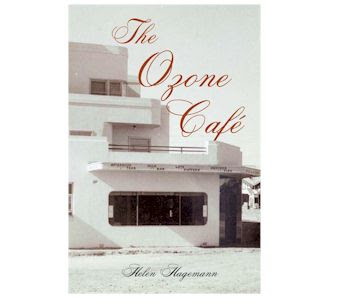
The Ozone Cafe

The Ozone Cafe
White Collar Crime

The Last Asbestos Town

The Last Asbestos Town
Available from Amazon

Evangelyne

Evangelyne
Published by Australian Poetry Centre, Melbourne

of Arc & Shadow

of Arc & Shadow
Published by Sunline Press, WA

Blog Archive

Powered by Blogger.

Search This Blog

Flickr Images

MBA (Wrtg) ECowan

My Photo
Perth, Western Australia, Australia
Helen Hagemann holds an MA in Writing from Edith Cowan University, has three poetry books: Evangelyne & Other Poems published by Australian Poetry, Melbourne (2009) and of Arc & Shadow published by Sunline Press, Perth (2013). Bounty: prose poetry is published by Oz.one Publishing in 2024. She has three novels published The Last Asbestos Town (2020), The Ozone Café (2021) and The Five Lives of Ms Bennett a result of her Masters degree at ECU (2006), is published by Oz.one Publishing (2023).

Helen Hagemann MBA (Wrtg): ECowan

Helen Hagemann MBA (Wrtg): ECowan
Author & Poet

INSTAGRAM

Popular Posts